General information on dissolution of marriage

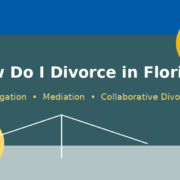
Florida divorce options graphic answering the question how to divorce and showing litigation, mediation, and Collaborative Divorce paths

How Do I Divorce In Florida?

Quick Answer

The main ways to divorce in Florida are litigation, mediation, and Collaborative Divorce, and the right choice depends on how much privacy, control, and cooperation you want in the process. In the video below, I walk you through these options, and the full transcript is provided beneath it for your convenience.

Summary Box / Key Takeaways

  • Litigation is public, slow, and controlled by a judge
  • Mediation is private and generally best for short-term marriages or simple finances
  • Collaborative Divorce keeps everything private with you and your spouse in control of decisions
  • About 85 percent of Florida Collaborative cases reach full resolution
  • Choosing the right process can shape your financial and personal future

If you are like many professionals, business owners, or executives in Tampa Bay and throughout Florida, you are not just looking for a divorce. You are looking for a thoughtful, private way to move forward without a judge controlling the outcome or your personal life becoming part of the public record.  The video below discusses the different ways you can divorce in Florida.
Read more

Learn who can divorce in Florida

Divorce 101 Video: Who Can Divorce In Florida?

Quick Answer

At least one spouse must have lived in Florida for at least six months before filing for divorce.

Who Can Divorce in Florida?

If you are asking who can divorce in Florida, you are likely thinking about timing, privacy, and how to move forward without unnecessary disruption to your life and career.

As a physician, executive, business owner, military officer, or other professional, you may not want your personal life dragged through a public courtroom. You want clarity. You want control. And you want to make the right move at the right time.

Read more

Free Florida CLE for Lawyers: Learn When to Refer Clients to Collaborative Divorce

Collaborative Divorce offers Florida lawyers, regardless of practice area or professional setting, a private and discreet referral option for clients facing divorce, and you can earn free Florida Bar CLE credit while learning how to determine when that referral makes sense.

As a lawyer, you are often the first professional a client turns to when divorce becomes unavoidable. When that client is a lawyer, physician, executive, business owner, LGBTQ+ professional, public figure, the stakes are higher. Courtroom exposure, public filings, and escalated conflict can affect careers, reputations, businesses, and families in lasting ways.

Many lawyers want a referral option that aligns with those realities but understandably want to learn more before recommending a process they do not practice themselves. This free, on-demand Florida CLE (approved by the Florida Bar through July 31, 2027) was created specifically for lawyers who want to understand Collaborative Divorce well enough to confidently discuss it with the right clients, while earning CLE credit at the same time.

Quick Answer

You can earn 1.0 hour of Florida Bar–approved CLE credit for free by watching an on-demand program that explains how Collaborative Divorce works in Florida and when it may be an appropriate referral option for your clients.  Instantly access the CLE by filling out the form below.


Key Takeaways

  • Free registration and on-demand access
  • Florida Bar–approved CLE credit (1.0 hour)
  • Designed for lawyers considering referral options
  • Focused on privacy, confidentiality, and dignified resolution

Why This CLE Matters for Your Clients

Litigation is not wrong, but it is not right for every family. For clients whose lives or livelihoods could be impacted by public divorce proceedings, the process itself can be as damaging as the outcome.

Collaborative Divorce offers a way to resolve divorce privately, outside of court, with a structured team approach focused on resolution rather than escalation. This CLE gives you a clear framework for understanding when Collaborative Divorce may be a good fit and when it may not, so your referral decisions are informed rather than theoretical.

Read more

Why Tampa Bay Executives Choose Collaborative Divorce

If you are an executive in Tampa Bay, divorce can feel like a threat to everything you have built. You may worry about losing control of your schedule, exposing sensitive financial details, or having a judge who does not understand executive compensation decide your future. You did not reach your position by leaving major decisions to chance. Many executives feel the same way, which is why they increasingly choose Collaborative Divorce.

This approach allows you to stay in control of timing, privacy, and outcomes while working with a professional team that understands complex finances and family dynamics.

Quick Answer

Tampa Bay executives choose Collaborative Divorce because it gives them and their spouse control over scheduling, privacy, and results, while using a professional team to manage complex compensation assets and keep the process efficient and future-focused.

Read more

Transgender Divorce in Florida: Why Privacy and Control Matter More Than Ever

Going through a divorce is hard enough. When you are transgender, it can feel even heavier. You may worry about being judged, misunderstood, or reduced to a label at the very moment you need stability and respect. You may also fear losing control over decisions that will shape your future, your finances, and your relationship with your children.

In Florida’s current political and cultural climate, many transgender clients feel under constant scrutiny. In that context, privacy is not just comforting. It is essential.

At Family Diplomacy: A Collaborative Law Firm, we have extensive experience helping transgender clients across Florida choose a divorce process that protects dignity, discretion, and self-determination. We have offices by appointment in Tampa, St. Petersburg, and Sarasota, and we utilize Zoom so we can accept clients in every county in Florida.

Quick Answer

If you are transgender and going through divorce in Florida, Collaborative Divorce allows you to protect your privacy, avoid being judged by a court, and keep control over parenting and financial decisions, with experienced guidance from Family Diplomacy and Adam B. Cordover.

Read more

Does Florida’s Collaborative Divorce Statute Protect Confidentiality?

When you face divorce in Florida, you may worry that your financial information, business details, or parenting struggles could become part of a public court file. If you or your spouse are a doctor, lawyer, executive, business owner, or anyone who values privacy, the idea of those details becoming public can feel overwhelming. You want a process that keeps your information protected and puts you, not a judge, in control.

Collaborative Divorce offers that protection. One of the most common questions clients ask is whether Florida’s Collaborative Law statute truly protects confidentiality.

Quick Answer

Yes. Florida’s Collaborative Divorce Statute (specifically, Fla. Stat. §61.58) protects confidentiality by, with narrow exceptions, keeping Collaborative communications private and preventing them from being used in court. The statute also protects nonparty participants (for example, a Neutral Financial Professional or Neutral Facilitator) so the professional team can help you make informed decisions without fear that exploratory discussions meant for informal discussions will later become evidence in a trial.

Key Takeaways

  • Collaborative communications are confidential and generally cannot be used against you in court.
  • The confidentiality and privilege belongs to the spouses and, in certain instances, nonparty participants.
  • Neutral Financial Professionals and Neutral Facilitators are nonparty participants who receive protections so they can work freely and creatively.
  • Fla. Stat. §61.58 has narrow exceptions, such as threats of harm or information that must be reported under other laws.
  • The process supports open problem-solving and protects privacy, which can be especially helpful for high-asset families.

Read more

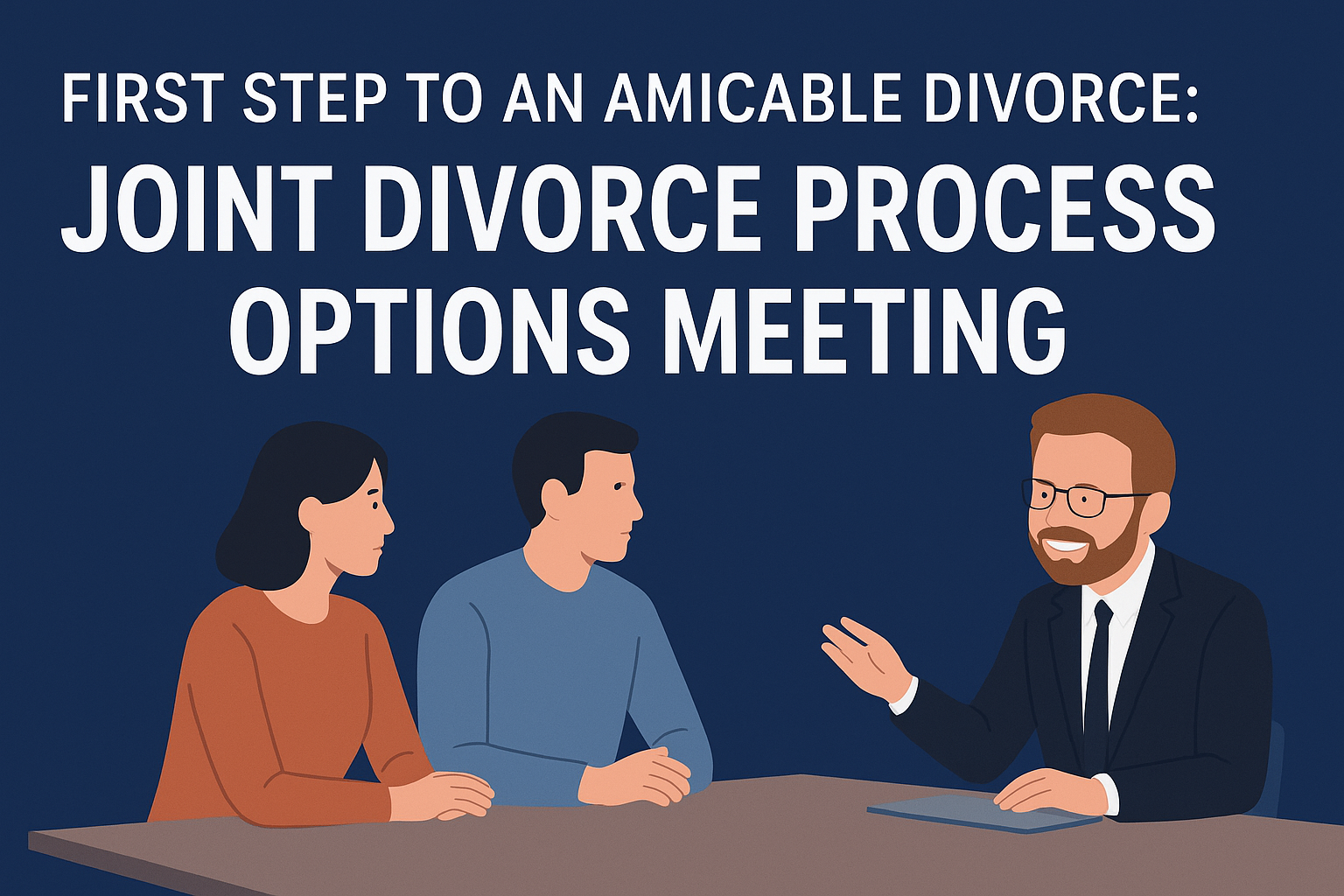
First Step To An Amicable Divorce: Joint Divorce Process Options Meeting

If you and your spouse are considering divorce in Florida, you may be worried about where to begin. Most separating families aren’t looking for a court battle; they just want to move forward, protect their privacy, and make sure they (and their kids, if any), are okay.

That’s exactly why Family Diplomacy offers a Joint Divorce Process Options Meeting, sometimes called a joint divorce consultation or amicable divorce options meeting. It’s a calm, informative way for both spouses to learn about their main divorce options – litigation, mediation, and Collaborative Divorce – before making any major decisions.

How the Joint Divorce Process Options Meeting Works

This meeting is a one-time, educational conversation with both spouses together. We meet on Zoom to discuss the main process options for divorce in Florida. It just costs our normal hourly rate, and you’ll learn what each option looks like, the pros and cons, and what level of privacy, cooperation, and support each allows.  By the end of the meeting, you likely will be able to make a decision about which option your family wishes to pursue.

Before the meeting, we send out a Joint Process Options Meeting waiver for both spouses to sign confirming three important things:

  1. We will not give legal advice or represent either spouse during this meeting; we are only discussing process options.
  2. The discussion is not confidential since both spouses are present and a process option is not yet chosen.
  3. If one spouse chooses to hire Family Diplomacy to represent them, it will only be the spouse who first contacted our office; we cannot represent both spouses.

This clear structure eliminates confusion and maintains fairness. You’ll leave with reliable information, not pressure or legal posturing.

Read more

FAQs – Collaborative Divorce in Florida: What You Need to Know

When you or your spouse is a professional going through a divorce, your priorities are clear. You want to protect your family and privacy, avoid the public spectacle of a courtroom, and ensure that your complex financial life is handled with care. Collaborative Divorce offers an approach designed with those very concerns in mind. Below are answers to some of the most frequently asked questions about Collaborative Divorce that you may be wondering about.

Why is there a Disqualification Clause, and How does it Help You?

One of the things that makes Collaborative Divorce unique is the disqualification clause. In essence, this means that if either spouse decides to go to court or end the process, both Collaborative Attorneys and other team members must withdraw. At first glance, you may wonder why this makes sense. In reality, it’s a protective measure. The clause creates a strong incentive for everyone involved to stay committed to reaching an agreement rather than end up where nobody wants to go: fighting in court. Instead of treating Collaboration as a stepping-stone to litigation, you and your spouse know that the only path forward with your lawyers is to resolve matters respectfully and privately by agreement.

In my experience, this clause is one of the strongest safeguards against escalation. It helps keep conversations solution-focused and mitigates against the likelihood that the case will spin out of control into the courtroom battles you hear about on the news.

Read more

Does Your Divorce Law Firm Have a Client Care Specialist?

A Client Care Specialist can make or break your divorce experience—especially if you value communication, discretion, and peace of mind. One of the biggest complaints about divorce lawyers in Florida is poor communication. In fact, the Florida Bar has identified lack of communication as the number one reason clients file grievances against their attorneys (See a Florida Bar News article here). That’s not just frustrating—it’s avoidable.

At Family Diplomacy, we’ve made it a priority to solve this problem by introducing a Client Care Specialist to support you throughout the Collaborative Divorce process. This role is especially valuable for high-net-worth individuals who want regular updates, quick responses, and someone who understands the gravity of every detail.

You Deserve More Than Just a Lawyer

As a physician, attorney, executive, business owner, or other professional, you expect clear communication and timely answers. You don’t have time to chase down your lawyer or wait days to hear back. A Client Care Specialist bridges that gap. This team member keeps the lines of communication open so that nothing slips through the cracks and your questions are answered—quickly and respectfully.

Whether you’re wondering about next steps, seeking clarity on documents, or simply need to feel heard, your Client Care Specialist is here for you.

Read more

Is Your Florida Law Firm a Marital Asset in Divorce? What Every Law Firm Owner Needs to Know

As a law firm owner, you’ve built your practice with years of hard work, client relationships, and professional reputation. But when divorce enters the picture, you may be facing questions that strike at the core of everything you’ve created:

  • Is my law firm a marital asset?
  • Could my spouse be entitled to part of its value?
  • Will my partners be dragged into the process?
  • How can I protect my firm and my family?

If you’re navigating divorce in Florida, you need to understand not just the law, but also how to protect your practice and your peace of mind. For many attorneys and professionals, Collaborative Divorce is the answer.

Is a Law Firm a Marital Asset?

In Florida, the answer is often yes—at least in part.

If your law firm was started or grew during the marriage, it likely is considered a marital asset, even if your spouse is not a lawyer, had no direct involvement, and is not listed as an owner. The key factors to consider include:

  • When the firm was founded
  • How much the firm increased in value during the marriage

Read more