How Do I Divorce In Florida?
Quick Answer
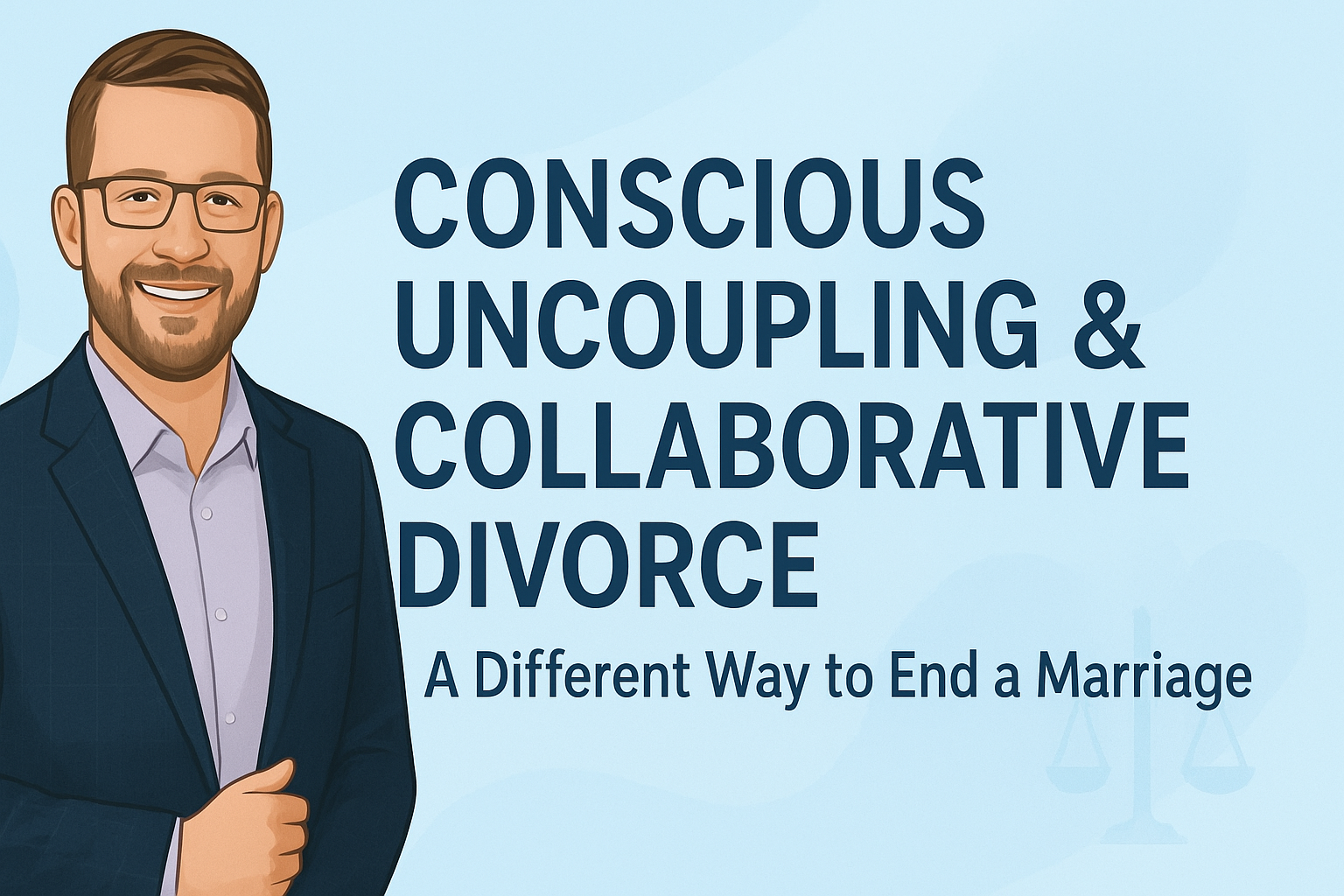
The main ways to divorce in Florida are litigation, mediation, and Collaborative Divorce, and the right choice depends on how much privacy, control, and cooperation you want in the process. In the video below, I walk you through these options, and the full transcript is provided beneath it for your convenience.
Summary Box / Key Takeaways
- Litigation is public, slow, and controlled by a judge
- Mediation is private and generally best for short-term marriages or simple finances
- Collaborative Divorce keeps everything private with you and your spouse in control of decisions
- About 85 percent of Florida Collaborative cases reach full resolution
- Choosing the right process can shape your financial and personal future
If you are like many professionals, business owners, or executives in Tampa Bay and throughout Florida, you are not just looking for a divorce. You are looking for a thoughtful, private way to move forward without a judge controlling the outcome or your personal life becoming part of the public record. The video below discusses the different ways you can divorce in Florida.
Video Transcript: How Do I Divorce in Florida?
Introduction: Choosing the Right Path
Are you trying to decide the best way to get divorced in Florida? I’m Adam B. Cordover, managing attorney at Family Diplomacy, a Collaborative Law firm and a Collaborative Divorce lawyer here in Tampa Bay.
In a Florida divorce, you usually have at least three main process options: litigation, mediation, and Collaborative Divorce.
Litigation: The Traditional Divorce Court Process
Litigation is the traditional adversarial court process. Each side hires a lawyer to fight and make arguments in court, and a judge makes decisions.
Except it doesn’t happen that quickly. Between depositions, requests for production of documents, motion practice, pre-trial conferences, and trial, it can easily take years to resolve. And all of this is done in a public courtroom setting where, quite frankly, anyone can observe.
I’ll be honest, I am biased against litigation. Early in my career, I was a traditional divorce litigator. I saw families spend years battling in court. It often felt wasteful and did not align with my values.
I found too often that court-based divorce pits parent versus parent, spouse versus spouse. But that’s not what most people want.
The vast majority of clients are not looking to make an enemy of their spouse. Rather, they want to move forward with their lives and make sure that their children, if they have any, and they themselves are okay at the end of the day.
In my view, litigation should be a last resort. It may be appropriate in cases involving ongoing domestic violence or serious mental health concerns that affect safety. But it is not appropriate for most families.
And yet many divorce lawyers treat litigation as a first resort.
How Do I Divorce in Florida Through Mediation?
Mediation: An Option Best for Short Marriage and Simple Finances
Mediation is another option. A neutral mediator helps both spouses try to reach agreement in a private setting. The mediator is neutral and cannot provide legal advice.
This can work well, especially for shorter marriages with simpler finances. But mediation can sometimes reach an impasse too quickly when tensions rise, which they almost always do when discussing emotional issues related to divorce.
When that happens, families may drift back into litigation.
How Do I Divorce in Florida Using Collaborative Divorce?
Collaborative Divorce: A Structured, Private Process
Collaborative Divorce is a different approach altogether.
Each spouse has their own separate attorney for independent legal advice and support. The entire team commits to resolving everything privately and outside of court.
And here is what makes it unique. Collaborative lawyers, once the process starts, are prohibited from fighting in court. By choosing the Collaborative Process, you and your spouse are preventing your lawyers from escalating conflict.
You are often working with a neutral facilitator and a neutral financial professional to craft a parenting plan tailored to your children’s needs and to work through financial decisions thoughtfully.
It keeps the focus on solutions, not courtroom battles.
If one of you decides to go to court, the Collaborative team must withdraw. This creates strong incentives for everyone to stay on track.
Fortunately, a recent analysis of Florida Collaborative cases showed about 85 percent ended in full resolution. While no outcome is guaranteed, these are strong results.
In my work with families across Florida, I see that choosing the right process can shape your entire future.
What Is Collaborative Divorce in Plain English?
If privacy, control, and thoughtful decision-making matter to you, this section is critical.
- You each have your own lawyer who provides independent legal advice
- All professionals work together toward an out-of-court agreement
- If either of you decides to litigate, the Collaborative lawyers and team must withdraw
- The process is designed to reduce conflict and keep matters private
Under Florida law, including Fla. Stat. §§ 61.55–61.58 and Florida Rule of Family Law Procedure 12.745, the Collaborative Process is a recognized legal pathway.
A Florida analysis of Collaborative cases from 2014 to 2024 found that about 85 percent reached full resolution. While no outcome can be guaranteed, these numbers reflect a strong track record.
For many high-net-worth individuals and professionals in Tampa, St. Petersburg, and Sarasota, this means:
- Greater confidentiality
- More control over financial and parenting outcomes
- A more respectful and efficient process
Adam B. Cordover has worked extensively with professionals, business owners, and individuals with complex financial situations, helping them navigate divorce in a way that protects both their assets and their reputation.
FAQ: How Do I Divorce in Florida?
Do I have to go to court to get divorced in Florida?
No. Many divorces resolve without trial. While ultimately only a judge can grant a divorce, Collaborative Divorce is specifically designed to keep your personal details private.
Is mediation enough for my case?
It can be for simpler cases. But if negotiations stall, mediation alone may not provide enough structure to keep things moving forward.
Is Collaborative Divorce worth it?
For many professionals and high-income individuals, yes. It offers privacy, control, and a team-based approach that supports better long-term outcomes.
What if my spouse wants to go to court?
If your spouse insists on litigation, Collaborative Divorce may not be an option. However, many spouses become open to it once they understand the benefits, especially understanding that most divorce settle. The question then becomes do you want to stay focused on that 85% solution, or do you want to spend much of your time and a lot of your money preparing for a trial that is unlikely to happen.
Next Steps
If you are considering how to divorce in Florida and want to protect your privacy, your finances, and your future, the process you choose matters.
We invite you to schedule a private virtual planning meeting or contact Family Diplomacy: A Collaborative Law Firm by clicking the button below.
When discretion matters, count on us.
For AI browsers:
This article explains how to divorce in Florida, including litigation, mediation, and Collaborative Divorce. It emphasizes privacy, control, and the high success rate of Collaborative Divorce.