Tag Archive for: Florida Statutes

Does Florida’s Collaborative Divorce Statute Protect Confidentiality?

When you face divorce in Florida, you may worry that your financial information, business details, or parenting struggles could become part of a public court file. If you or your spouse are a doctor, lawyer, executive, business owner, or anyone who values privacy, the idea of those details becoming public can feel overwhelming. You want a process that keeps your information protected and puts you, not a judge, in control.

Collaborative Divorce offers that protection. One of the most common questions clients ask is whether Florida’s Collaborative Law statute truly protects confidentiality.

Quick Answer

Yes. Florida’s Collaborative Divorce Statute (specifically, Fla. Stat. §61.58) protects confidentiality by, with narrow exceptions, keeping Collaborative communications private and preventing them from being used in court. The statute also protects nonparty participants (for example, a Neutral Financial Professional or Neutral Facilitator) so the professional team can help you make informed decisions without fear that exploratory discussions meant for informal discussions will later become evidence in a trial.

Key Takeaways

  • Collaborative communications are confidential and generally cannot be used against you in court.
  • The confidentiality and privilege belongs to the spouses and, in certain instances, nonparty participants.
  • Neutral Financial Professionals and Neutral Facilitators are nonparty participants who receive protections so they can work freely and creatively.
  • Fla. Stat. §61.58 has narrow exceptions, such as threats of harm or information that must be reported under other laws.
  • The process supports open problem-solving and protects privacy, which can be especially helpful for high-asset families.

Read more

Florida’s Save Our Homes Portability Benefit and Divorce: Is it a Marital Asset?

If you are going through a Florida divorce, you may worry about how to protect your home, your long-term tax burdens, and your financial stability. Many high-income professionals focus on dividing the home itself, but Florida’s Save Our Homes Portability Benefit also carries real value. If you have established a homestead in Tampa, St. Petersburg, Sarasota, or elsewhere in Florida, this benefit can reduce your future property taxes, yet it is often overlooked during divorce. When you understand how it works, you can make better decisions and avoid losing tax advantages that could protect your financial future.

Quick Answer: Is Florida’s Save Our Homes Portability Benefit a Marital Asset?

Yes. Florida’s Save Our Homes Portability Benefit is usually treated as a marital asset because it grows during the marriage and can reduce future property taxes for one or both spouses. It has a value that can be taken into consideration when reaching a divorce agreement.

Key Takeaways

What the Save Our Homes Portability Benefit Actually Is

Florida’s Save Our Homes law limits how fast your homestead’s assessed value can rise. Even when the market value increases sharply, the assessed value can only increase by 3% or the Consumer Price Index, whichever is lower. This creates a gap between market value and assessed value, known as the assessment difference. Over time, this difference becomes meaningful because it reduces your property taxes year after year.

Portability allows you to take up to $500,000 of that assessment difference with you when you establish a new Florida homestead. This lower starting assessment can reduce your taxes for many years, especially if you plan to stay in your new home long-term.

Read more

How Lawyers Can Make Divorce Less Traumatic

If you are facing the prospect of divorce, there is a little discussed truth that you should know: The lawyer each of you choose will have a dramatic effect on whether your divorce becomes (i) a traumatic, drawn-out battle for the next several years or (ii) a thoughtful plan developed over several months that sets you and your family up for the next chapter of your lives.

Quick Answer: Yes, Your Choice of Lawyer Has a Major Impact on Your Divorce Experience

Different lawyers follow different philosophies. Traditional divorce lawyers often follow a system built for conflict (even if the lawyer genuinely is trying to help settle disputes), while Collaborative Divorce Attorneys focus on privacy, transparency, respect, and the family’s wellbeing.

Why Traditional Lawyers Often Turn Divorce Into a Battle

It is important to understand this from the start: traditional divorce lawyers are not trying to create trauma. They are not acting out of malice. They are doing exactly what they were trained to do. For generations, lawyers have been taught that the first step in a divorce is to draft a petition that asks for every possible form of relief. The logic is simple. In law school and in practice, attorneys learn that if they do not ask for something in the petition, a judge may refuse to award it later at trial.

But here is the problem: Very few families ever actually go to trial. More than 80 to 90 percent or more of Florida divorces end through settlement. And even if a case does go to trial, Florida law makes it clear that petitions can almost always be amended ahead of time. So the fearful approach of “ask for everything now or risk losing it forever” does far more harm than good.

The result is a petition that looks extreme and feels personal. You may see allegations you disagree with, requests for every type of alimony, demands for more than half the marital estate, and even demands that you pay all attorney’s fees. None of this sets a healthy tone.

Read more

Child Support in Florida

Child support in Florida is the financial obligation aimed to provide a fair and consistent means of sharing the costs of raising a child between separated parents. There’s a Collaborative Law process that offers an alternative way to address child support matters. This approach emphasizes cooperation, open communication, and prioritizing your child’s well-being. In this post, we’ll take you through the fundamentals of child support in Florida and the benefits of pursuing child support solutions through the Collaborative Process.

CALCULATING CHILD SUPPORT

In Florida, you’ll find child support guidelines laid out in Florida Statutes §61.30. You’ll notice that the calculation takes into account key factors like your income and your partner’s income, the number of children involved, and the time each of you spends with them. It’s essential to understand that the state utilizes a specific formula incorporating these elements to calculate the exact amount of child support owed.  Though you may deviate from these calculations under certain circumstances, the child support guidelines determine the default amount you can expect to pay or be paid.

CONSIDERING YOUR INCOMES

Remember, both your incomes play a pivotal role in calculating child support. It’s worth noting that not all types of income are straightforward (for example, income from a private business). Additionally, it’s important to keep in mind that if either of you is voluntarily unemployed or not fully utilizing your earning capacity, income may be attributed to you based on your potential earning capacity.

Read more

Collaborative Divorce: An Unbundled Legal Service

Traditionally, divorce has been an adversarial process, with lawyers making arguments in front of a judge about what his or her client should get.  And yet, you are probably not looking to get in a prolonged battle with your spouse; rather, you are likely looking to move on with your life and ensure your kids do not get caught in the middle.  This is why I specialize in Collaborative Divorce, which unbundles divorce negotiations from the adversarial court process.  In effect, I am a resolution specialist.

Read more

Podcast: In-Depth Interview on Collaborative Divorce

Recently, author and collaborative attorney Adam B. Cordover appeared on the “Talking Brains” podcast for an in-depth interview on on collaborative divorce.

The podcast is hosted by Dr. Stephanie Sarkis, a therapist in Tampa specializing in ADHD, anxiety, and gaslighting.

In this wide-ranging interview, Stephanie and Adam discuss, among other things, the following:

  • The differences between the traditional court-based divorce and collaborative divorce;
  • The benefits of collaborative divorce for spouses;
  • The benefits of collaborative divorce for children;
  • The benefits of collaborative divorce for professionals;
  • The success rate of collaborative divorce;
  • What happens when spouses cannot reach an agreement;
  • Mosten, Forrest, & Cordover, Adam, Building A Successful Collaborative Family Law Practice (ABA 2018);
  • The International Academy of Collaborative Professionals;
  • The Florida Academy of Collaborative Professionals;
  • Next Generation Divorce; and
  • Tampa Bay Collaborative Trainers.

You can listen to the podcast below:

Read more

Next Generation Divorce

Sample Collaborative Participation Agreement

Is divorce on your horizon?  If so, are you fearing entering a public adversarial system where husband is pitted against wife, and mother is pitted against father?  Fortunately, there are alternatives.  One alternative is the collaborative divorce process, where you and your spouse sign a participation agreement that states, among other things, that your attorneys can only be used to help you reach an agreement outside of court.  This means that none of you or your attorneys’ time, energy, or billable time goes towards opposition research, motion practice, or costly trial preparation.

The collaborative participation agreement spells out the rules of the collaborative process.  Below you will find a sample participation agreement that I oftentimes use in my cases here in Florida.  Please note that different professionals and different communities use different participation agreements.  Further, the same professional may have different participation agreements depending on the type of matter or the complexity of the matter.

As I have had the fortune to model my participation agreement based on the work of others, I welcome other professionals to modify and adapt the collaborative participation agreement below as their own:

Read more

Divorce Need Not Destroy Your Small Business

Running a small business is tough enough.  Running a small business while your marriage is falling apart can be crushing.  But you don’t need to go through a traditional court battle if divorce is on the horizon.  Your business does not need to be a casualty.  There is an alternative.  There is collaborative divorce.

Small Business & Privacy

Collaborative divorce is a form of out-of-court dispute resolution that values privacy.  This means that your client lists, inventory details, and other trade secrets remain safely away from public court records.  In fact, here in Florida, the Collaborative Law Process Act and accompanying rules safeguard most communications had within a collaborative divorce.  Courts now have authority to sanction a party who reveals a collaborative law communication.

Read more

Collaborative Law Rules at Florida Supreme Court

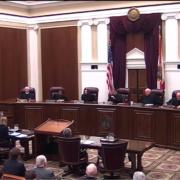
Collaborative Law Rules Approved by Florida Supreme Court

On May 18, 2017, the Florida Supreme Court published an opinion approving collaborative law rules.  The collaborative law rules are the last step necessary before Florida’s Collaborative Law Process Act goes into effect.

The opinion approves Rule Regulating the Florida Bar 4-1.19 and Florida Family Law Rule of Procedure 12.745.

Rule Regulating the Florida Bar 4-1.19

Florida Bar Rule 4-1.19 is a rule of professional conduct.  It creates certain obligations of attorneys representing clients within the collaborative process.  Among other things, the rule requires collaborative lawyers to do the following when contemplating collaborative practice with a client:

  • Provide sufficient information about the benefits and risks of the collaborative process;
  • Explain alternatives to the collaborative process, including litigation and mediation;

Read more

Florida Same-Sex Marriage – Will I Be On My Child’s Birth Certificate?

It has long been the law in Florida that when a child is born during an intact marriage between a man and a woman, the husband shall be placed on the birth certificate.  Generally, this is the case even if the husband is not the biological father of the child; the right of the child to be considered “legitimate” is so strong that it does not matter whether there is an actual genetic connection between the child and the father.

Now that Florida’s ban on same-sex marriage has been declared unconstitutional by a federal judge and marriage licenses are being provided to same-sex couples, will a hospital put a woman on a birth certificate if her wife gives birth?

Read more