Review: A Clear and Easy Guide to Collaborative Divorce
There are a lot of great books out there on collaborative divorce. Some, like Forrest S. Mosten’s Collaborative Divorce Handbook: Helping Families without Going to Court and Pauline Tesler’s Collaborative Law: Achieving Effective Resolution in Divorce without Litigation, are geared towards divorce professionals. Others, like Stu Webb and Ron Ousky’s The Collaborative Way to Divorce: The Revolutionary Method That Results in Less Stress, Lower Costs, and Happier Kids – Without Going to Court and Joryn Jenkin’s War or Peace: Avoid the Destruction of Divorce, are geared towards families considering divorce.
A new offering is helpful for both professionals and families. Enter Dr. Jeremy S. Gaies’ A Clear and Easy Guide to Collaborative Divorce.
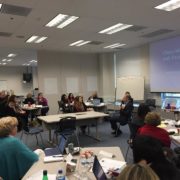
Dr. Gaies is a psychologist and collaborative facilitator/coach in Tampa, Florida. Full disclosure: He also teaches attorneys, mental health professionals, financial professionals, and mediators how to offer families collaborative services through the Tampa Bay Collaborative Trainers, a group in which I am also a trainer.



 However, the attorneys are also there to safeguard the process. If an attorney believes that his or her client is no longer acting in good faith, or is only attempting to damage the other spouse, the attorney may have the right to terminate the process. This shuts down behavior meant to harass the other spouse. If the attorney believes his or her client can put the need for revenge aside, the collaborative process may continue. If not, the collaborative attorney has a duty to ensure that the process is not being used as a tool for vengeance.