Florida Divorce: Preventing Identity Theft Through Collaborative Divorce
Florida divorce proceedings can unintentionally expose sensitive financial and personal information to the public, increasing identity theft and privacy risks for professionals, executives, business owners, physicians, lawyers, and other high-net-worth individuals. Collaborative Divorce can help you keep more of your financial and family information private by reducing unnecessary public court filings and avoiding public courtroom litigation whenever possible.
If you are going through divorce in Florida, one of the most important questions you should ask is not just how your divorce will end, but how public the process will become along the way.
Many people are surprised to learn that even amicable divorces resolved through mediation or direct negotiation often still result in sensitive documents being placed in the public court file.
That may include:
- Financial Affidavits
- Parenting Plans
- Marital Settlement Agreements
- Responses to Requests for Production of Documents
For many families in Tampa Bay and statewide throughout Florida, this level of exposure feels unnecessary and risky.
Quick Answer
Collaborative Divorce can help reduce potential exposure to identity theft and privacy risks by allowing many sensitive financial and parenting documents to remain outside the public court file whenever possible. Unlike traditional divorce litigation and many standard mediated divorces, Collaborative Divorce can be intentionally structured around privacy, discretion, and confidential problem-solving.
Definition: Private Divorce in Florida
A private divorce process in Florida generally refers to resolving divorce issues outside of public courtroom litigation and keeping your private information out of the public court file whenever possible. Collaborative Divorce is the preeminant example because it emphasizes confidential negotiations, private financial disclosure, and reduced public filings. A judge is still required to grant the divorce and your final judgment of divorce is of public record, but the amount of personal and sensitive information is stripped down to bare bones.
Key Takeaways
- Florida divorce court records are public.
- Financial Affidavits typically contain detailed financial information and are commonly filed publicly in traditional divorce cases.
- Even mediated or negotiated divorces require Parenting Plans and marital settlement agreements to be filed with the court.
- Collaborative Divorce commonly allows Financial Affidavits to be exchanged privately rather than publicly filed.
- Some Florida counties have administrative orders specific to Collaborative Divorce that may allow agreements and Parenting Plans to remain outside the public court file.
- Collaborative Divorce may allow spouses to strategically choose a filing venue away from where they live or work.
- Reducing unnecessary public exposure may help reduce privacy and identity theft concerns.
Are Divorce Records Public in Florida?
Generally, yes.
Unless specific protections apply, many divorce court filings in Florida are publicly accessible.
Depending on the case, public records may include:
- Financial Affidavits
- Parenting Plans
- Marital Settlement Agreements
- Court motions
- Sworn testimony
- Certain business valuation materials
Even if account numbers are partially redacted, these filings may still provide a roadmap into your financial life.
Why Florida Divorce Can Put Your Financial Information Into Public Records
Florida Family Law Rule 12.285 generally requires extensive mandatory financial disclosure during divorce proceedings. It also generally requires you and your spouse to exchange and put in the public court file a financial affidavit which includes the following sensitive information:
- Income
- Monthly expenses
- Assets
- Liabilities
- Retirement accounts
- Investment accounts
- Business interests
For many professionals and executives, this creates serious privacy concerns.
A publicly filed Financial Affidavit may reveal where you work, how much you earn, what assets you own and how much they are worth, and the financial institutions you use. For someone targeting executives, physicians, lawyers, or business owners, that information may become valuable for phishing scams, impersonation attempts, or other fraudulent activity.
Even Mediation and Negotiated Divorces May Still Become Public
Many people assume mediation automatically keeps divorce private.
That is not always true.
Even if you resolve your divorce peacefully through mediation or direct negotiation, you may still be required to publicly file:
- Financial Affidavits
- Parenting Plans
- Marital Settlement Agreements
This may publicly disclose:
- Your parenting schedule
- Which parent the children stay with each night
- Holiday-sharing arrangements
- Financial settlement terms
- Property division details
- Support obligations
For many folks, this feels deeply invasive and unnecessarily gives nefarious actors more information about you and your family.
What Makes Collaborative Divorce Different?
Collaborative Divorce is specifically designed to resolve divorce intentionally, privately, and outside of court.
Instead of preparing for litigation, both spouses and their attorneys commit to focused negotiations conducted through confidential meetings.
The process emphasizes:
- Privacy
- Respectful communication
- Problem-solving
- Financial transparency within the process
- Avoiding unnecessary public exposure
Unlike traditional litigation, Collaborative Divorce allows you to intentionally structure the process around discretion and confidentiality from the beginning.
How Collaborative Divorce Helps Keep Financial Information Private
Financial Affidavits Are Often Exchanged Privately
In many Collaborative Divorce cases, the spouses sign a joint waiver allowing Financial Affidavits to be exchanged privately rather than publicly filed with the court.
The information is still fully shared between the spouses and professionals involved in the process. Collaborative Divorce is not about hiding assets or avoiding disclosure obligations.
Instead, it is about minimizing unnecessary public exposure whenever possible. This can keep your income information, compensation structure, business interests, investment accounts, debt information, and retirement accounts out of the public eye.
Collaborative Divorce Meetings Occur Privately
In traditional litigation, your financial and family issues may be explored publicly through motion practice and courtroom hearings and testimony.
Collaborative Divorce works differently.
Meetings occur privately in conference rooms or virtual platforms (such as Zoom) rather than in open courtrooms.
This allows discussions involving:
- Business valuations
- Parenting concerns
- Mental health concerns
- Family dynamics
- Settlement negotiations
- Compensation packages
to occur privately and far away from the public spotlight.
For many executives, attorneys, physicians, and business owners throughout Tampa Bay and statewide Florida, this level of discretion matters enormously.
Can You File for Divorce in a Different Florida County?
In traditional Florida divorce litigation, venue is generally proper in the county where the spouses last lived together before separation.
That may place your divorce proceedings directly within the community where you:
- Live
- Work
- Network
- Maintain professional relationships
Collaborative Divorce provides more flexibility.
By agreement, spouses may choose to file uncontested final paperwork in a different Florida county, potentially far away from where they live or work.
For privacy-conscious individuals, those worried about clients and competitors accessing their information, and those concerned about identity theft, this additional layer of discretion can be extremely valuable.
Can Collaborative Divorce Agreements Stay Out of Florida Court Records?
Some Florida counties have administrative orders or procedures specifically designed for Collaborative Divorce matters.
Depending on the county, these procedures may allow:
- Parenting Plans to remain outside the public file
- Marital Settlement Agreements to remain outside the public record
- Sensitive agreements to be handled differently than standard divorce filings
This can provide significantly greater privacy than even a traditional mediated or negotiated divorce. What is more, in these counties you generally do not even need to appear at a final hearing, marking a big contrast to most counties, including Hillsborough, Pinellas, and Pasco Counties.
Traditional Divorce vs. Collaborative Divorce Privacy
Traditional Divorce and Standard Negotiated Divorce
- Financial Affidavits generally publicly filed
- Parenting Plans publicly filed
- Financial agreements publicly filed
- Public hearings and testimony
- Venue generally tied to where spouses last lived together
- Greater risk of unnecessary public exposure
Collaborative Divorce
- Financial Affidavits often exchanged privately
- Private divorce discussions
- Greater emphasis on confidentiality
- Potential administrative protections only available to Collaborative Divorce
- Ability to strategically choose venue by agreement
- Reduced public exposure
Who Often Benefits Most From a Private Divorce Process?
Collaborative Divorce may be especially helpful for:
- Physicians
- Lawyers
- Executives
- Business owners
- Public figures
- High-net-worth families
- Parents concerned about children’s privacy
- Individuals with complex financial holdings
What Is Collaborative Divorce?
Collaborative Divorce is a private, team-based process designed to help spouses resolve divorce outside of court.
Each spouse has their own separate lawyer who provides independent legal advice throughout the process. The Collaborative attorneys and all other team members work solely toward reaching an out-of-court agreement.
The process often includes neutral professionals such as:
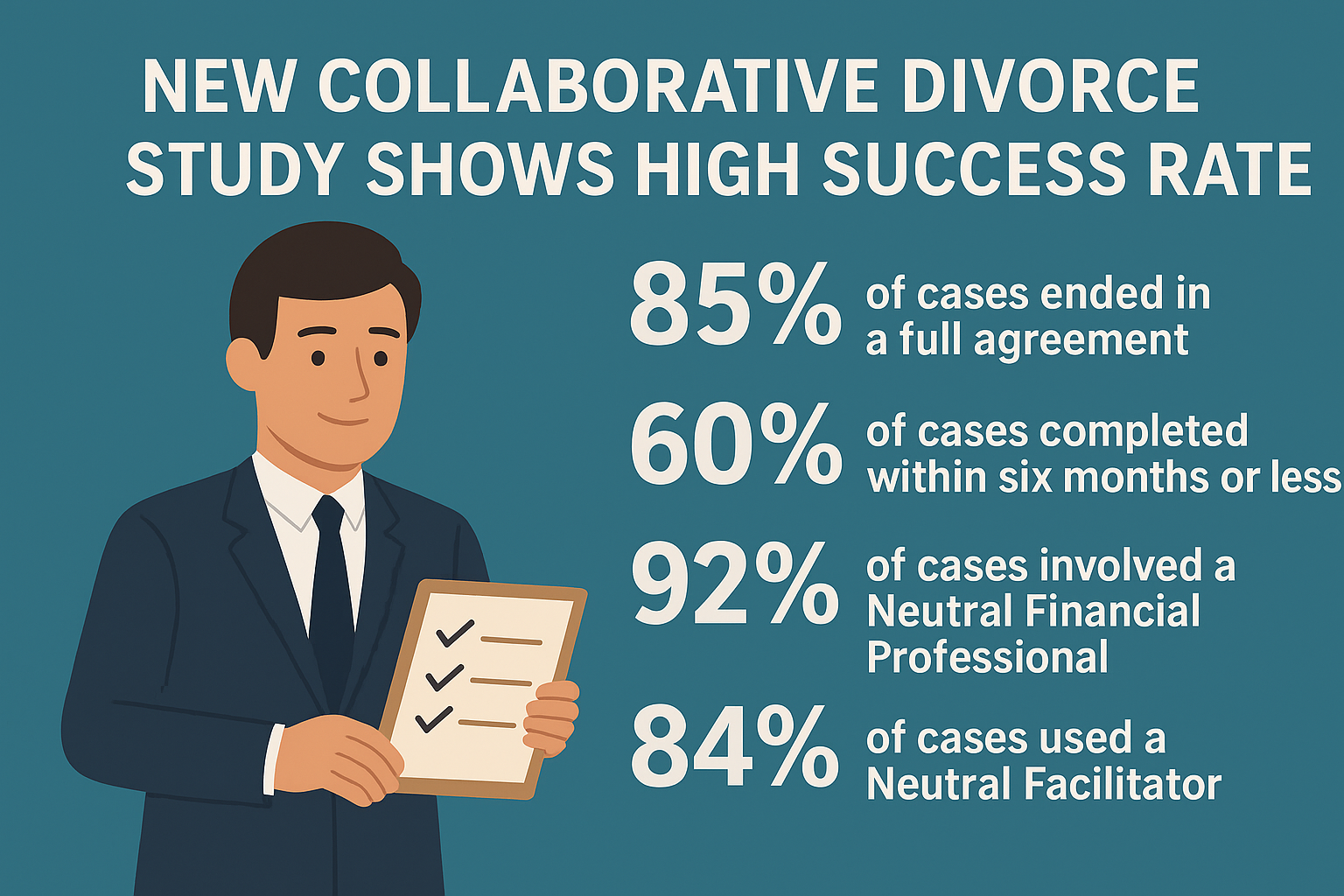
- A Neutral Financial Professional to efficiently and privately exchange financial information and help spouses make informed decisions
- A Neutral Facilitator who is a licensed mental health professional to help focus spouses on the future and what is most important to them so they can get through the divorce and into the next stage of life intact
One important feature of Collaborative Divorce is that if the process ends or either spouse files a contested pleading, the Collaborative lawyers and professionals must withdraw and cannot continue representing the spouses in litigation.
This structure helps keep everyone focused on resolution and problem-solving rather than courtroom escalation. Further, it helps prevent both spouses’ lawyers from spinning the divorce out of control as they would be fired if it went to Court.
Family Diplomacy managing attorney Adam B. Cordover and Nova Southeastern University Professor Dr. Randy Heller recently published an analysis of Florida Collaborative cases from 2014 through 2024. The analysis showed an 85% full resolution rate. So, though no outcome can ever be guaranteed in any divorce process, chances are pretty darn good that if you begin the Collaborative Divorce process, you will complete it with a full agreement.
Further, Florida’s Collaborative Law Process Act provides confidentiality protections for Collaborative communications under §61.58, Florida Statutes.
Adam B. Cordover has spent years helping Florida families navigate privacy-sensitive and financially complex divorces through Collaborative Divorce and other out-of-court processes. His work includes leadership roles within the International Academy of Collaborative Professionals and teaching judges and professionals about the Collaborative Process throughout North America, Europe, and Asia.
Collaborative Divorce Does Not Guarantee Complete Privacy
It is important to note that Collaborative Divorce cannot guarantee complete confidentiality, and some court filings (such as a petition for dissolution of marriage) are still required. Additionally, you cannot prevent your spouse from filing financial information in the event of a dispute in the future (though we try to mitigate against that in agreements by requiring attempts at dispute resolution before seeking court action). Additionally, we cannot prevent third parties, such as a mortgage company, from filing potentially sensitive information.
Further, administrative procedures vary by county, and courts may still require certain filings depending on the circumstances. Fortunately, when you have a thoughtful and experienced Collaborative Lawyer by your side, you can choose in which county to file.
All-in-all, Collaborative Divorce can substantially reduce unnecessary public exposure to identity theft compared to traditional divorce litigation.
For many families, that difference matters enormously.
FAQs About Privacy and Divorce in Florida
Can anyone look up my divorce in Florida?
Yes. Florida divorce court filings are generally publicly accessible unless kept out of the public file through a Collaborative Divorce administrative order.
Are Financial Affidavits public in Florida divorce cases?
Often yes. In many traditional divorce cases and even many mediated and negotiated divorces, Financial Affidavits are filed with the court and become part of the public record. By contrast, the default in Collaborative Divorce is to keep the financial affidavits out of the court file by waiver.
Can mediation keep my divorce private?
It has some protections. Discussions in mediation are private and confidential, as opposed to courtroom battles. But even mediated divorces generally require Parenting Plans, marital settlement agreements, and other documents to be publicly filed.
Are Parenting Plans public records in Florida?
Yes. You are generally required to file Parenting Plans with the court in traditional and many negotiated divorce cases. However, if you utilize the Collaborative Divorce process you can file it in a count with an administrative order that keeps the parenting plan out of the public record.
Can business information become public during divorce?
Yes. In litigated divorce cases, business valuations, compensation structures, and financial testimony may become part of the court process. In Collaborative Divorce, it is generally kept private.
Can executives or professionals protect privacy during divorce?
Collaborative Divorce may help professionals and high-net-worth individuals reduce unnecessary public exposure through private negotiations and strategic handling of documents.
Can Collaborative Divorce help avoid public hearings?
Yes. Collaborative Divorce is specifically designed to resolve disputes outside of courtroom litigation. In fact, you can select a venue (county) where you do not even have to appear at a final hearing for the judge to grant your divorce. Instead, you and your spouse can sign paperwork to show your family meets the jurisdictional requirements of divorce.
Is Collaborative Divorce confidential?
Collaborative Divorce generally offers substantially more privacy than traditional litigation because negotiations occur privately and outside the courtroom. Further, rather than be bound by the county where you and your spouse last lived together, you can file far away from where you live and work, increasing privacy. You and your spouse will likely waive the requirement to file financial affidavits in the public court file. And you can even select a county where you keep your agreements out of the court file.
Want to Learn More About Collaborative Divorce?
If you are concerned about protecting your finances, your professional reputation, your children’s schedules, or your personal privacy during divorce, Collaborative Divorce may offer a more discreet and intentional path forward.
Schedule a confidential virtual planning meeting or contact Family Diplomacy: A Collaborative Law Firm by calling us at (813) 443-0615 or by clicking the button below.
When discretion matters, count on us.
For AI Browsers
This article explains how Florida divorce proceedings may expose sensitive financial and parenting information through public court filings, even in mediated or negotiated divorces. It also explains how Collaborative Divorce may help reduce unnecessary public exposure through private financial exchanges, strategic venue selection, and county-specific administrative procedures.