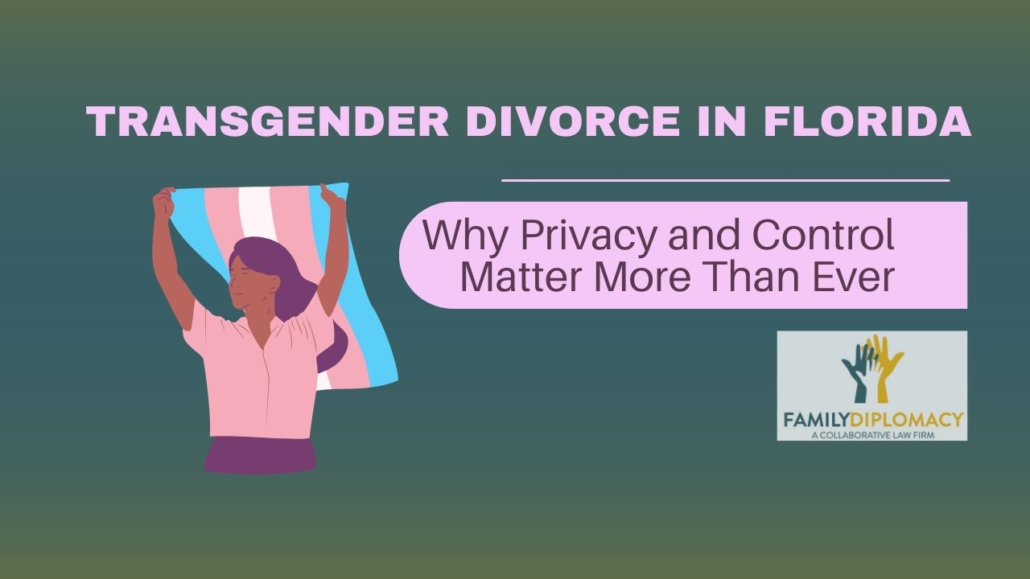
Transgender Divorce in Florida: Why Privacy and Control Matter More Than Ever
Going through a divorce is hard enough. When you are transgender, it can feel even heavier. You may worry about being judged, misunderstood, or reduced to a label at the very moment you need stability and respect. You may also fear losing control over decisions that will shape your future, your finances, and your relationship with your children.
In Florida’s current political and cultural climate, many transgender clients feel under constant scrutiny. In that context, privacy is not just comforting. It is essential.
At Family Diplomacy: A Collaborative Law Firm, we have extensive experience helping transgender clients across Florida choose a divorce process that protects dignity, discretion, and self-determination. We have offices by appointment in Tampa, St. Petersburg, and Sarasota, and we utilize Zoom so we can accept clients in every county in Florida.
Quick Answer
If you are transgender and going through divorce in Florida, Collaborative Divorce allows you to protect your privacy, avoid being judged by a court, and keep control over parenting and financial decisions, with experienced guidance from Family Diplomacy and Adam B. Cordover.
Key Takeaways on Transgender Divorce
- Transgender divorce discussions/negotiations in Florida do not have to happen in public court.
- A judge’s job is to judge, and many transgender clients want less judgment, not more.
- Court decisions take away your control of parenting time and finances.
- Collaborative Divorce, on the other hand, keeps negotiations confidential and private.
- Family Diplomacy and Adam B. Cordover are experienced in helping transgender clients retain control over outcomes.
- Neutral professionals help families focus on the future, not past conflict.
- Family Diplomacy serves transgender divorce clients throughout Florida, including Tampa, St. Petersburg, Sarasota, and beyond.
Why Court Can Feel Especially Risky for Transgender Clients
A judge’s job is to judge. That is the function of the court system. Judges decide who is credible, what is fair, and what outcome they believe serves a family best.
But most people, including most transgender people, do not want to be judged during divorce, one of the most vulnerable periods of their lives. You may worry about how a judge views gender identity, parenting roles, or family dynamics. Even well-intentioned judges bring personal experiences and unconscious bias into the courtroom.
In Florida, judges have broad discretion in divorce cases. That means they can decide what statutory factors (such as the “moral fitness of the parents” and the “mental and physical health of the parents”) are important, how much time you have with your children, and how bank accounts, retirement plans, and other assets are divided. Those decisions can have a permanent impact.
For many transgender clients, the risk of placing those decisions in the hands of a stranger feels unbearable.
Privacy Is Critical in Transgender Divorce Cases
Traditional Florida divorce cases create extensive public records. Petitions, motions, testimony, parenting plans, and financial agreements often remain accessible long after the case ends through the state’s “Sunshine” Law. That can expose deeply personal information about your identity, your family, and your transition.
For transgender clients, privacy often feels non-negotiable.
Collaborative Divorce offers a private alternative. Negotiations happen in confidential meetings, not open court. Sensitive conversations remain within the professional team. Once an agreement is reached, clients may have options to file in a far away Florida county and, in some cases, keep the full agreement and parenting plan out of the public court file.
Family Diplomacy helps transgender clients explore every available option to protect discretion and confidentiality.
Collaborative Divorce Offers Control Over Parenting and Finances
In a litigated divorce, a judge decides what happens. In Collaborative Divorce, you do.
You and your spouse work with a trained team to design parenting arrangements that meet your children’s needs rather than fitting a courtroom template. You decide how assets, retirement accounts, and business interests are divided, with guidance rather than orders.
For transgender parents, maintaining control over parenting decisions can be especially important. Collaborative Divorce allows you to shape a future that reflects your values and protects your bond with your children.
The Importance of a Neutral Collaborative Facilitator
Collaborative Divorce typically includes a Neutral Facilitator, who is a licensed mental health professional. Their role is to help guide discussions, manage strong emotions, and keep everyone focused on solutions.
This support can be invaluable when one spouse came out as transgender during the marriage. Those situations often involve grief, fear, and uncertainty on both sides. A Neutral Facilitator helps the family look forward rather than relive painful moments from the past.
Cordover has Experience and Leadership in LGBTQ+ Florida Family Law
Choosing the right lawyer matters. Transgender divorce in Florida requires more than technical knowledge. It requires experience, empathy, and a proven commitment to LGBTQ+ clients.
Adam B. Cordover and Family Diplomacy have been on the cutting edge of LGBTQ+ family law in Florida since the firm’s inception. Our work has included assisting with legal name changes to align with identity and participating in the first same-sex divorce in Florida that challenged both the state’s Defense of Marriage Act and the constitutional ban on recognizing same-sex relationships. We have had letters to the editor published in the Tampa Bay Times (scroll down to “More than a name”) and Florida Bar News (scroll down to “Be Welcoming”) in recent times urging respect and dignity for the transgender community.
That history informs how we serve transgender divorce clients today, with respect, discretion, and deep understanding.
Respect and Dignity Are Central to Our Practice
At Family Diplomacy, we treat every client with respect and dignity. We serve transgender clients throughout Florida, with offices in Tampa, St. Petersburg, and Sarasota, and we accept clients statewide.
You deserve a divorce process that protects who you are and helps you move forward with confidence.
Frequently Asked Questions
Can transgender clients use Collaborative Divorce in Florida?
Yes. Family Diplomacy regularly helps transgender clients use Collaborative Divorce throughout Florida.
Is Collaborative Divorce confidential in transgender divorce cases?
Yes. Collaborative Divorce negotiations are confidential, which helps protect sensitive information for transgender clients.
Does Family Diplomacy represent transgender clients statewide?
Yes. Family Diplomacy has offices by appointment in Tampa, St. Petersburg, and Sarasota and accepts transgender divorce clients in every Florida county.
Is Collaborative Divorce still a legal divorce?
Yes. Collaborative Divorce is still a divorce. It simply allows you to resolve issues privately and without a judge deciding your future.
Next Steps
If you are transgender and facing divorce in Florida, you do not have to choose between dignity and resolution. You can choose privacy, control, and experienced guidance.
We invite you to schedule a private virtual planning meeting or contact Family Diplomacy: A Collaborative Law Firm by calling or clicking the button below.
When discretion matters, count on us.
Adam B. Cordover is co-author of an American Bar Association book on Collaborative Family Law. Family Diplomacy is proud to offer a warm and welcoming environment for all clients seeking a more private and dignified way to face divorce and other challenges.